


Product center
Product center
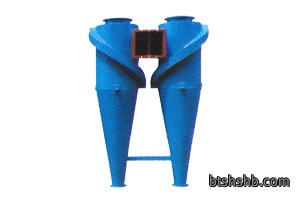

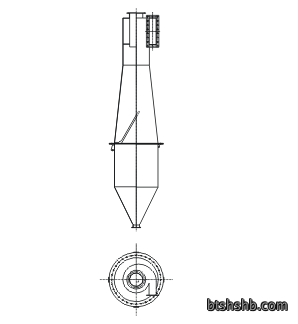
CLK diffused cyclone
The structure of the dispersive cyclone dust collector is characterized by the cone turning into an inverted cone and the reflection screen fixed by gas at the lower part, which can avoid the secondary dust collection caused by the enrolling and enrolling of the upswirl airflow returning from the upper part of the dust, so it can improve the dust removal efficiency. On the other hand, the cross section of the inverted cone is smaller and larger, so that the swirling velocity of the dusty gas in
The structural design of the dispersive cyclone dust collector represents a sophisticated engineering approach to particulate matter separation, characterized by a distinctive configuration where the traditional cone geometry transitions into an inverted cone formation, with a specially positioned reflection screen secured through gas dynamics principles at the lower operational section. This innovative architectural arrangement serves to effectively prevent the occurrence of secondary dust reentrainment, which would otherwise result from the complex enrolling and counterclockwise circulation patterns created by the upswirl airflow that naturally returns from the upper regions of the dust collection chamber.
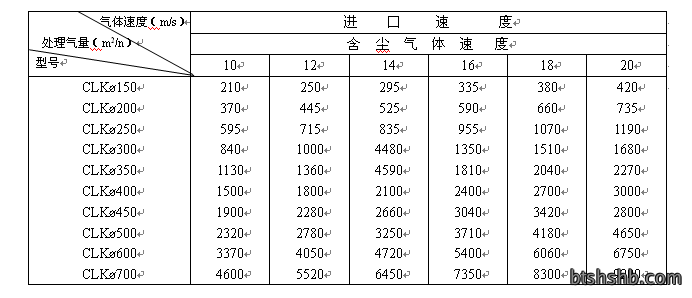
The performance characteristics of the dispersive dust collector represent an important category within industrial air pollution control equipment, designed specifically to handle particulate matter separation in manufacturing environments. The CLK dispersive cyclone dust collector model exemplifies this technology class, with its primary performance metrics and operational specifications documented in comprehensive technical evaluation tables. The dispersive dust collector design achieves its functional advantages through deliberate optimization of internal air flow organization within the collection chamber, which differs fundamentally from conventional cyclone designs by improving particle separation efficiency across varying operational conditions. This refined air circulation pattern maintains structural simplicity throughout the manufacturing process, avoiding complex internal baffles or intricate geometric configurations that would increase production costs and assembly complexity. A significant operational strength of the dispersive collector lies in its demonstrated adaptability across widely fluctuating dust concentration scenarios, accommodating inlet dust loads ranging between 2 and 200 grams per cubic meter without experiencing substantial performance degradation. This concentration tolerance proves particularly valuable in applications involving batch processing or inconsistent dust generation rates, where inlet conditions may shift significantly during operating cycles.


 Copy product links
 Long by picture save/share
INQUIRY


Add Successfully

PRODUCT CENTER
TECHNICAL FORUM
APPLICATION CASE
NEEWS
©2023 Guangzhou Yikang Environmental Protection Equipment Co., LTD. Record number: Guangdong ICP No. 19123380
Service Hotline: 020-86950666 020-86958537 Address: No. 88 Chaoyang Road, Huadu District, Guangzhou City, Guangdong Province
Service hotline: 020-86950666 020-86958537
Add: No.88 Chaoyang Road, Huadong Town, Huadu District, Guangzhou City, Guangdong Province
©2023 Guangzhou Yikang Environmental Protection Equipment Co., LTD. Record number: Guangdong ICP No. 19123380